
Methodologies

MPI convenes the right teams, maps and tests processes, reports outcomes, and scales what works—without replacing line authority.
We fill operational gaps for departments to deliver improvements in the 3E’s:
Efficiency (cost)
Effectiveness (outcomes), and
Experience (service quality)

3E Performance Model
Efficiency
How smoothly do we get the work done?
Reduce friction in workflows
Remove redundancy and waste
Free resources to focus on high-impact work
Improve helpfulness of tools and data availability
Effectiveness
Are we achieving the right things, and are they staying achieved?
Achieve the outcomes residents and staff care about
Set clear benchmarks and performance thresholds
Use data-driven decision-making and opportunity monitoring
Experience
How do people feel about the service?
Make services easy to understand and use
Increase consistency and expectation-setting
Ensure transparent communication when friction is unavoidable
Design for inclusivity to ensure the right goals
How MPI Improves Efficiency
…by doing more with the same resources — or the same with fewer.
Lean Process Improvement
When we use it:
Everyday operations with measurable waste, delays, or costs.
What it does:
Reduces friction, speeds up service delivery, and saves money without sacrificing quality.
In practice:
Process mapping, waste identification
Standardization and SOP development
Concepts and calculations
Pilots and measures
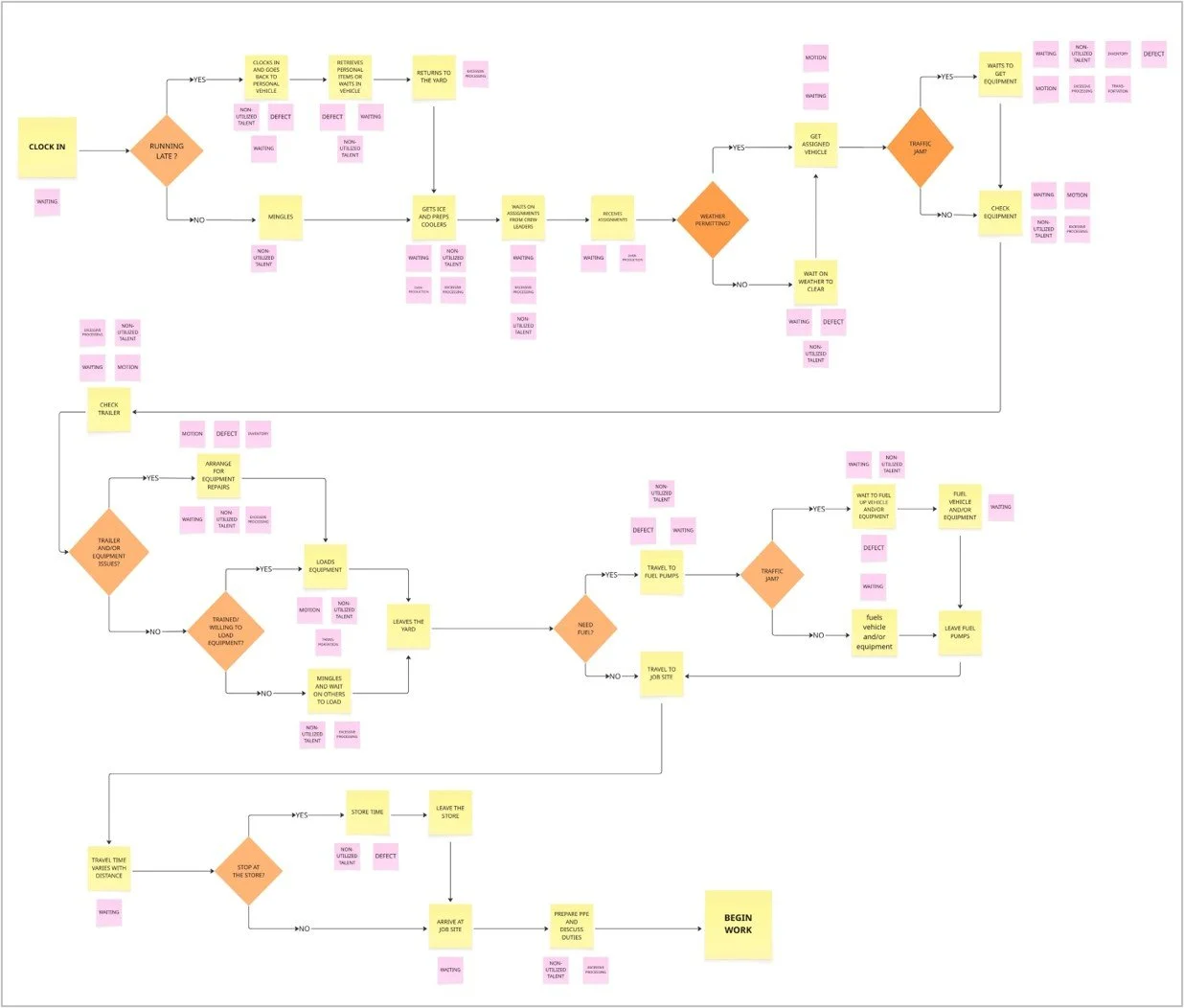
An internal process map with yellow notes depicting actions, orange notes depicting decision points, and pink notes depicting identified waste.
How MPI Improves Effectiveness
…by ensuring the City achieves the right outcomes — the ones people value.
Design Thinking / Path to Innovation
When we use it:
Big, complex, cross-department challenges where outcomes aren’t clear.
What it does:
Helps us understand what’s going on, what residents and staff actually need, and how to align city systems with results that matter.
In practice:
Workshops, journey mapping, empathy interviews
Define → Discover → Develop → Deliver
Produces actionable prototypes and strategic pilots

Bloomberg Center for Public Innovation’s “Path to Innovation” - A design thinking model crafted specifically for Civic Innovation.
How MPI Improves Experience
…by making city services feel easy, helpful, and predictable.
Service & UX Design
When we use it:
Where residents, businesses, or staff interact with a city service.
What it does:
Improves clarity, usability, and satisfaction at each touchpoint.
In practice:
Service blueprinting
Customer journey mapping
Persona creation
Pain-point analysis
Co-designing touch-points
Ensuring transparency and consistency

Permitting and Inspections Service Blueprint

Permitting and Inspections Customer Persona Cards

Permitting and Inspections Customer Journey Map